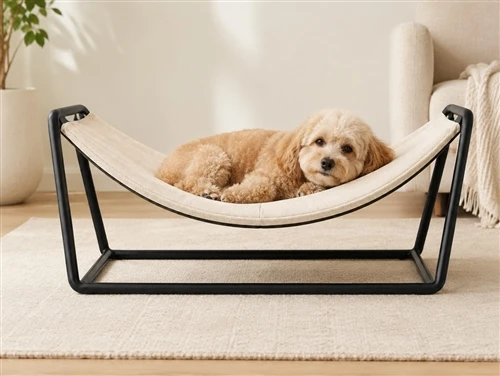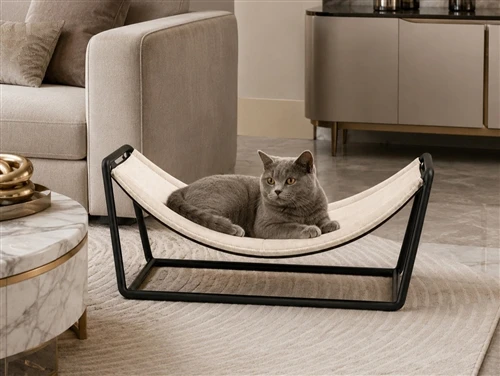
A newly installed cat tree or pet bed may start making strange noises after a period of use-a "squeak" when the pet jumps onto the platform, a "creak" when the tree wobbles, and a slight creak when the pet rolls over on the mattress. Most owners will dismiss this as "normal aging" and ignore it. However, noise is often an early sign of structural problems and should not be ignored.
Besides its structural health implications, noise itself can affect the pet's experience. Cats and dogs have far more sensitive hearing than humans-what humans perceive as a "slight" squeak may be a jarring noise to a pet. If every time a pet jumps onto the tree, it is accompanied by disturbing noises, they may gradually reduce their use of the furniture or even avoid it altogether.
I. Common Sources of Noise in Pet Furniture Friction at Joints
This is the most common source of noise from cat trees. The joints (screws, bolts, angle irons) between the platform and the uprights will experience slight relative movement when impacted by a pet's jumps. Friction between wood and metal, or between metal parts, will produce squeaks or creaks. When the connecting screws begin to loosen, the relative movement increases, and the noise becomes more noticeable and frequent.
- Wood Deformation – Wood is a natural material and is very sensitive to changes in temperature and humidity. When humidity rises, wood expands slightly; when humidity falls, it contracts. If a plank of the cat tree is fixed to a rigid connection point and cannot expand or contract freely, stress will be generated inside the wood. This stress is released through the tiny deformations of the wood when the pet jumps, producing a creaking or cracking sound.
- Base Displacement – When the base of the cat tree lacks anti-slip pads or the pads are worn, the impact of a pet jumping will cause the base to slide slightly on the ground. Each slide is accompanied by a friction sound between the base and the ground; this sound is usually muffled but still clearly audible in a quiet environment.
- Aging of Filling Material – After long-term use, the foam filling of the pet bed will fatigue, and tiny cracks will appear in its internal structure. When the pet moves on the bed, these broken foam cell walls rub against each other, producing a slight "rustling" or "creaking" sound. Memory foam hardens in low temperatures, making the noise more noticeable when the pet turns over.
- Structural fatigue – this is the most concerning noise source. When wood or connectors are subjected to repeated impacts over a long period, tiny fatigue cracks may appear inside the material. These cracks open and close with each stress, producing a clear "click" or "pop" sound. Structural fatigue noise means that a part of the material is nearing damage; if not addressed promptly, it may lead to structural failure.
II. How to Eliminate Noise from Pet Furniture
- Tighten all connecting screws – for 90% of noise problems, tightening screws is the most direct solution. Use a wrench of the appropriate size to thoroughly tighten all connection points, paying particular attention to the connections between the platform and the uprights, the base and the main column, and the angle iron fixing screws. After each tightening, shake the climbing frame to test if the noise disappears. If the noise disappears after tightening, the problem was caused by loose screws, and the problem is solved.
- Install sound-absorbing pads at joints-If noise persists after tightening the screws, it indicates friction between the wood and metal. A thin layer of sound-absorbing material can be added between the joint surfaces to isolate the noise. This is done by sandwiching a small piece of felt or rubber pad (1-2 mm thick) between the wood and metal parts. Cut the pad to the same shape as the metal contact surface, place it between the two, and then tighten the screws through the pad.
- Apply lubricant to wood joints-For friction noise between wood pieces, apply a small amount of paraffin wax, beeswax, or wood wax oil to the joint. The wax penetrates the tiny pores of the wood surface, reducing the coefficient of friction and eliminating the noise. Be careful not to apply too much to avoid wax overflowing and staining fabric or flooring.
- Reinforce loose structures-If a platform has a noticeable wobble accompanied by a clear noise, the connection may be more than just "loose"; it may be "damaged." Check the wood for cracks or indentations, and check if the pre-embedded nuts have come loose from the wood. If cracks are found in the wood, fill the cracks with wood glue and clamp them in place for 24 hours, or reinforce them externally with metal connecting plates.
- Replace worn anti-slip pads-friction noise from the base usually indicates that the anti-slip pads are worn, flattened, or have fallen off. Replace them with brand new rubber anti-slip pads, or place an anti-slip mat between the floor and the base.
- Addressing pet bed noise-If the noise is caused by aging foam, consider adding a new thin layer of memory foam to the mattress, or replacing the old foam core with a new one. However, memory foam is expensive; if the mattress is over 3 years old and has multiple sources of noise, replacing the entire mattress may be more economical.
III. Preventative Measures-Reducing Noise at the Source
- Choose the correct size connectors-Pay attention to the specifications of the hardware when purchasing. Larger bolts (5mm or more in diameter) with matching pre-embedded nuts loosen far less over long-term use than smaller bolts. The smaller the tolerance of the connectors, the tighter the initial assembly, and the less noise caused by loosening under stress later.
- Apply thread-locking adhesive during installation-When installing screws at critical connection points, apply a small amount of thread-locking adhesive (medium strength blue is sufficient) to the threads. After curing, the adhesive provides moderate adhesion, preventing screws from loosening due to vibration, while still allowing for easy unscrewing with tools. This significantly reduces noise caused by loose screws.
- Regular inspection and maintenance-Conduct a quick "noise test" every 2-3 months-Apply pressure to each level of the scaffolding by hand, shake the structure, and listen for any unusual noises. Address any noise promptly to prevent small problems from escalating. Regular tightening and maintenance is the most effective way to prevent noise.
- Pay attention to environmental changes-During seasonal transitions (spring when humidity rises, autumn when humidity falls), wood dimensions change most significantly, making noise most likely to occur. During these periods, increase the frequency of inspections (once a month) and address any new unusual noises promptly.
IV. Noise and Safety-A Relevant Connection
Noise is not just an "annoying background noise"; it is often an early warning sign of structural problems. A slightly loose screw, if left unattended, can come loose completely after months of continuous impact, causing one end of the platform to lose support. A tiny crack caused by wood deformation, if undetected, can suddenly expand into a through-crack under a larger impact, causing the platform to break.
Ignoring noise as "negligible" is dangerous. A more sensible approach is to stop and inspect pet furniture when it makes noises it hasn't made before. In most cases, it's just a loose screw that can be tightened. However, in rare cases, noise can indicate more serious structural fatigue, and timely intervention can prevent a potential pet injury.
V. Summary
The noise from pet furniture is the furniture "speaking"-telling you that a connection is loosening, a piece of wood is deforming, or a component is nearing the end of its life. Understanding this "language" and taking timely action is a practical skill for maintaining the safety and lifespan of your furniture.
A faint creaking sound might just be a signal from a loose screw. Taking five minutes to check and tighten it will not only restore the quietness of your furniture, but also ensure that your pet is standing on a sturdy and reliable structure every time they jump or rest.