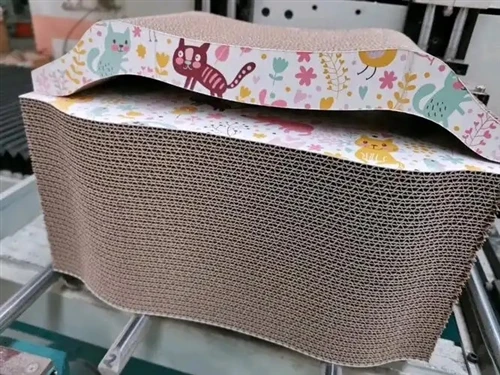
Almost every cat owner has experienced this: a newly bought leather sofa, barely enjoyed for a few days, is covered in shocking scratches; the curtains have loose threads torn at the hem; the carpet edges are curled and peeling. Faced with this "destruction," many people's first reaction is anger or helplessness-but in fact, cats scratching isn't "destructive," but rather an important behavior rooted in instinct.
Understanding this is not only key to improving the human-cat relationship, but also the scientific basis for choosing cat trees and scratching facilities.
I. Why Do Cats Scratch? - Four Core Reasons
1. Scratch Sharpening and Nail Maintenance-A cat's nails have a layered structure, and the outer layer of keratin becomes blunt or peels off over time. Scratching helps cats peel off the old outer layer of nails, revealing sharp new nails. This is purely a physiological need, similar to human nail trimming.
2. Marking Territory-Cats have scent glands on their paw pads. When they scratch, the pheromones secreted by these glands adhere to the surface of the scratched object, leaving visual scratch marks. This dual marking of scent and sight conveys the signal "This place is occupied" to other animals.
Muscle stretching and exercise-scratching is a full-body stretching movement: the front paws grip the surface, the back arches, and the shoulder and forelimb muscles are fully stretched. This is similar to morning stretches in humans, helping to maintain muscle and joint flexibility.
Emotional release-when cats are excited, tense, or anxious, scratching is an effective way to release emotions. Scratches after greeting their owners when they come home, and scratches after being startled, all convey emotional signals.
II. Why is "forbidding" never effective?
Many cat owners try to stop their cats from scratching furniture by scolding or spraying water, but the effect is often minimal, or even counterproductive. The reason is that scratching is not a "bad habit" for cats, but a survival instinct. Trying to "eradicate" scratching behavior is as unrealistic as trying to teach a cat not to blink.
The truly effective strategy is not "forbidding," but "guiding"-providing cats with more attractive scratching alternatives than sofas or curtains. This is the core function of cat trees and scratching posts.
III. How do cat trees guide scratching behavior?
The rope posts wrapped around cat trees are specifically designed to satisfy the scratching instinct. Their effectiveness depends on the following factors:
Material attractiveness-The rough fiber texture and natural scent of natural jute or sisal rope have a natural appeal to cats, far surpassing the appeal of smooth sofa fabrics. Studies show that cats prefer natural fibers to synthetic materials.
Placement suitability-Cats like to scratch in areas where they frequently move around, especially after waking up. Placing the cat tree in areas where the cat frequently passes by or sleeps is more likely to be used than placing it in a corner. If the sofa is the cat's most frequent scratching target, the scratching post can be placed close to the sofa to create an "alternative path."
Stability-If the scratching post wobbles or tipps over when the cat scratches, it will immediately lose trust. Choosing a cat tree with a sturdy base and stable structure will ensure the cat uses it with confidence.
Diverse Scratch Options – Different cats have different scratching angle preferences: some prefer vertical scratching (like on a pillar), while others prefer horizontal scratching (like on a floor scratching post). High-quality cat trees typically offer a variety of scratching surfaces to meet different needs.
IV. How to Train Your Cat to Use a Cat Tree?
Even with a perfectly designed cat tree, some cats need guidance to accept it. The American College of Fellowships of the Wild recommends the following methods:
Position Adjustment – Place the cat tree near furniture your cat is already accustomed to scratching, giving it a chance to "switch targets."
Scent Guidance – Gently rub catnip or silver vine on the rope of the cat tree to stimulate your cat's interest using natural attractants.
Positive Reinforcement – Immediately reward your cat with treats or petting when it actively uses the cat tree to scratch. Reinforce this behavior with each successful attempt.
Patience – Some cats need days or even weeks to accept new furniture. During this time, do not force or scold them, but continue to encourage them with scent and rewards.
V. Scratching Isn't Destruction-Re-understanding Feline Nature
When a cat scratches the sofa, it's not "retaliating" or "causing trouble." It's simply doing something that has continued for millions of years of evolution-maintaining its claws, marking its territory, and stretching. The purpose of a cat tree is not to "correct" this behavior, but to provide it with a more suitable "space."
From this perspective, a cat tree is not just a "furniture protector," but also a respect for feline nature. When a cat scratches, stretches, and leaves its scent to its heart's content on the tree, then happily jumps onto the top platform to sleep-this in itself is the meaning behind the design of a good cat tree.